
Residential
House drains and downpipes
For backed-up connections and drains carrying runoff away from roofs, yards and driveways.
Drain Vac · South West Victoria
Water backing up after rain? Drain Vac clears blocked stormwater drains, downpipe connections, farm drains and car park drains around Warrnambool.
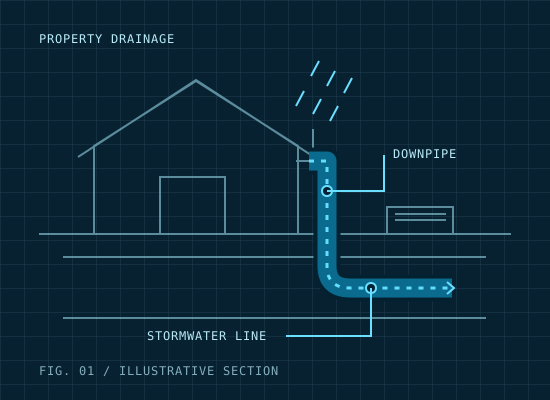
01 / Read the signs
Where water first appears can help narrow down where the drainage problem starts. Tell us what you see during rain and how long it takes to clear.
How to spot a blocked stormwater drain02 / What we clear
Drain Vac clears roots, silt, leaves and other debris that restrict rainwater flow. The right starting point depends on where the blockage sits and how the drain can be accessed.
Residential
For backed-up connections and drains carrying runoff away from roofs, yards and driveways.
Rural
For drains around sheds, yards and driveways where soil and organic material collect.
Commercial
For slow or blocked drainage around paved areas, loading zones and shared access points.
03 / Follow the runoff
Start with the first place water escapes. On a Warrnambool property, the same patch of paving might receive runoff from a roof, a garden bed and a driveway. The location of the puddle tells you where the water ended up. The sequence of events gives you a better clue about where the system stopped taking it.
Note whether water comes out at the bottom of the downpipe or spills from the gutter above. If other downpipes keep working, that detail can help narrow the investigation to one connection or branch. If the overflow only happens on a particular side of the building, include that in your enquiry.
When two or more outlets overflow during the same shower, they may share a restriction further along the line. Tell us which outlet backs up first, whether water appears at a pit and how long it takes each point to settle after the rain eases. Drain layout and surface levels can affect what you see.
From a dry, safe position, look for leaves covering the grate or water coming back up through it. A covered inlet and a restricted outlet can produce similar pooling. Leave heavy covers in place and describe what you can see from above. The team can discuss whether the pit, its outlet or both need attention.
Recurring blockages
How quickly the problem returns is worth recording. A drain that backs up during the next shower gives the team different clues from one that runs freely for several months. If you have a previous invoice or inspection notes, check which line was worked on and what was found. Two grates close together may feed different branches.
Cleaning can restore flow by removing the material in the pipe. A camera inspection can help show whether a visible pipe defect or root entry point is contributing to the repeat blockage, where the line is accessible. Ask what the inspection can cover and whether the pipe needs clearing first.
Before you enquire
A short description of the affected drain and its surroundings helps the Drain Vac team discuss the job. At a house, name the closest landmark, such as the garage downpipe or back courtyard grate. For a shop or managed property, say whether the water affects a loading zone, public path or shared car park. On a farm, identify the shed, yard or driveway and describe the route in.
For a job you are arranging on someone else’s behalf, include the contact who can confirm access and say whether the affected area is shared. If the pooling has already cleared, send the time and location of the most recent incident. A rough sketch showing the nearest downpipe, grate and low point can also help explain what happened.
If several fixtures such as toilets and sinks are affected when they are used, say so when you call. That pattern is different from rainwater backing up at a downpipe or outside grate, and it helps the team discuss which service fits.
If you cannot identify the drain, describe what happened in order. For example, the grate near the driveway filled first, then water ran towards the garage. That gives the team something specific to discuss when you call.
04 / From symptom to next step
If the water starts spilling at roof level, gutter cleaning may be relevant to the same runoff path.
05 / The Drain Vac field guide
Five short guides to help you describe the symptoms and decide what to ask about.
01 / Symptoms
Work out whether the problem starts at the gutter, downpipe, pit or buried drain.
02 / Blockages
Find out what clearing tree roots can restore and why the pipe may still need inspection.
03 / Diagnosis
Understand when cleaning can restore flow and when CCTV can help investigate the cause.
04 / Drainage
Use what happens at the grate and after rainfall to describe a drainage problem accurately.
05 / Booking
Give Drain Vac the property details, symptoms and access information that help scope the job.
06 / Local service area
Drain Vac cleans drains in Warrnambool and surrounding communities including Dennington, Allansford and Woodford. Include your address when you enquire so the team can discuss your property and access.
View the Drain Vac listing on Google Maps07 / Common questions
Stormwater drains carry runoff from roofs and outdoor surfaces. Sewer drains carry wastewater from fixtures such as toilets and sinks. Tell us whether the problem starts during rain or when you use a fixture so we can discuss the right service.
Yes, Drain Vac clears roots from stormwater lines. If roots have entered through a gap or damaged section, a camera inspection can help assess where they are getting in.
A camera is especially helpful if the cause is unclear or the same drain keeps blocking. The team can discuss whether it makes sense for your drain and whether clearing is needed first.
Send the property address, affected drain and what happens during rain. Include photos if you have them and mention any gate or vehicle access restrictions.
Warrnambool · VIC 3280
Tell Drain Vac where the water backs up and what happens when it rains.